
What to Expect During Dental Implant Treatment in Flower Mound, TX
October 1, 2026Depending on its location, the gap may change how you chew, alter the way nearby teeth contact each other, or make a removable replacement feel less secure.
What Are Dental Implants?
A dental implant replaces the root portion of a missing tooth with a post positioned in the jawbone. An abutment then connects the implant to a crown, bridge, or other dental restoration. During osseointegration, bone heals closely around the implant surface and helps provide stability. The timing varies because bone quality, implant location, general health, and other clinical factors can influence healing. For a single missing tooth, an implant can support a crown without using adjacent teeth as bridge anchors. Implants can also support replacement teeth when several or all teeth are missing.Who May Be a Candidate for Dental Implants?
Implants may be considered when a patient has one or more missing teeth or a damaged tooth that cannot be predictably restored. The dentist looks at jawbone support, gum condition, oral hygiene, bite forces, medical history, and the health of the proposed surgical site. Limited bone does not always prevent implant care because grafting can sometimes improve the foundation for placement.What to Expect Before Dental Implant Treatment
Initial Dental Implant Consultation
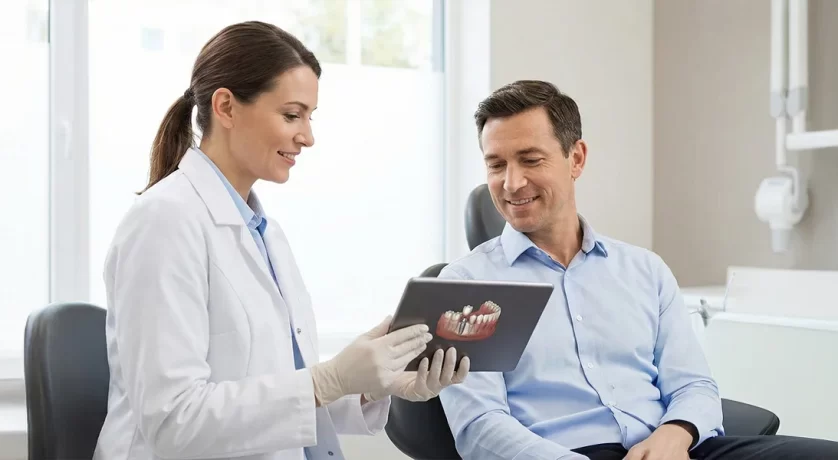
The first appointment establishes whether an implant is appropriate and whether another tooth-replacement option deserves consideration. Expect a review of your medical and dental history along with an examination of the teeth, gums, and bite. If a natural tooth remains treatable, we may discuss preserving it before moving toward extraction. This patient-first approach is consistent with ADA guidance that implant decisions should follow a comprehensive examination and discussion of reasonable treatment alternatives.Digital Imaging and Treatment Planning
Implant planning requires information that a visual examination alone cannot provide. The office uses CBCT 3D imaging, digital X-rays, and intraoral scanning. Three-dimensional imaging helps the dentist assess available bone and nearby structures, while digital data can assist with planning implant position and, when appropriate, a surgical guide.Step-by-Step Dental Implant Treatment Process
Step 1: Comprehensive Evaluation
The dentist checks bone support and surrounding tissues. Existing dental or gum problems may need treatment first.Step 2: Tooth Extraction, If Needed
A tooth that cannot be saved may need removal. Same-day implant placement depends on bone, tissue health, infection, and stability.Step 3: Bone Grafting When Necessary
Bone grafting may be needed when there is not enough support for an implant. Additional healing can extend the timeline.Step 4: Implant Placement
The dentist uses local anesthesia before placing the implant. Patients may still notice pressure or vibration during the procedure. 3D planning and a custom surgical guide may be used when appropriate.Step 5: Healing and Osseointegration
The implant needs time to integrate with the jawbone. Follow-up visits help the dentist monitor healing.Step 6: Abutment and Final Restoration
After adequate healing, an abutment connects the implant to the final restoration. The dentist checks its fit, bite, function, and appearance.Same-Day Dental Implants in Flower Mound, TX
A same-day approach may be possible for selected patients when the bone and initial implant stability are favorable. This does not necessarily mean every stage is completed permanently in one visit. A temporary tooth can sometimes be attached first while the implant continues integrating with the jawbone. The permanent restoration is completed when conditions are appropriate. Immediate treatment should therefore be based on clinical findings, not speed alone.Dental Implant Options for Different Types of Tooth Loss
One missing tooth can often be restored with a single implant and crown. When several teeth are absent, implants may support multiple restorations or an implant-supported bridge. Patients with extensive tooth loss may also be evaluated for implant-supported dentures or fixed full-arch options. All-on-4 dental implants use strategically positioned implants to support a full arch of replacement teeth in appropriate cases. Bone anatomy, bite, restorative space, hygiene needs, and individual goals determine the best design.How Long Does Dental Implant Treatment Take?
No single timeline applies to every patient. Straightforward cases usually require fewer stages than treatment involving extraction, bone grafting, multiple implants, or additional tissue healing. Even when a temporary tooth is provided early, the implant still needs adequate biological healing before the final restoration takes normal biting forces. Your dentist can provide a more useful estimate after examining the implant site and reviewing the planned procedures.Is Dental Implant Treatment Painful?
Local anesthesia is used during dental implant surgery to control discomfort. You may still notice pressure, vibration, or movement. Temporary soreness, tenderness, or swelling may occur afterward. Follow the individualized instructions you receive regarding medications, eating, cleaning, and physical activity. Contact the dental office if pain or swelling worsens instead of improving, bleeding continues despite following postoperative instructions, or you develop fever, drainage, or another unexpected symptom. Seek urgent medical care for difficulty breathing or swallowing.What to Expect After Dental Implant Placement
- Immediately After Treatment
- During the Healing Period
- After the Final Restoration
How to Care for Dental Implants
Implants do not develop cavities, but plaque can still irritate the surrounding tissues and contribute to inflammation. Brush twice daily and clean carefully around the implant with floss, an interdental brush, or another method recommended for your restoration. ADA home-care guidance also supports twice-daily brushing with fluoride toothpaste and individualized cleaning recommendations based on patient needs. Routine examinations and regular cleaning help the dental team monitor the implant, gums, restoration, and bite. Regular cleaning applies when periodontal disease is absent. Patients with periodontal disease may require periodontal treatment or a different maintenance schedule.How Dental Implants Fit Into Comprehensive Dental Care
Implant care should consider the health of the entire mouth, including the gums, nearby teeth, plaque control, and bite. Dr. Dhaval Patel is a general, cosmetic, and implant dentist with experience in implants, bone grafting, crowns, extractions, root canal treatment, and implant-supported restorations. When a natural tooth can still be saved, preservation may be the first option. If not, we can discuss options such as an implant, bridge, or removable replacement.Dental Implant Costs and Financing in Flower Mound, TX
Implant costs vary based on the number of implants, restoration type, imaging, extractions, grafting, and other needed care. Insurance coverage also varies. The practice lists CareCredit, Cherry financing, and an in-house membership option, with eligibility and payment details confirmed before treatment.When Should You Consider Dental Implants?
An implant consultation may be worthwhile if you have lost a tooth, have several missing teeth, struggle with chewing because of tooth loss, or have a tooth that has been judged non-restorable. However, dental implants aren’t the right answer for everyone or every missing tooth. A clinical examination and appropriate imaging allow the dentist to compare tooth replacement options and explain their benefits, limitations, maintenance requirements, and possible risks.Common Questions About Dental Implant Treatment
Final Thoughts
A successful implant plan begins with understanding the entire mouth, not simply filling a space. Bone support, gum health, implant position, restorative design, healing, and long-term home care all deserve attention. If you are exploring tooth replacement, Towne View Dental Care – Flower Mound can evaluate your oral health, review the available options, and explain whether implant treatment fits your clinical needs and goals.
Dr. Dhaval Patel
Dr. Dhaval Patel, general, cosmetic, and implant dentist at Towne View Dental Care in Flower Mound, TX, brings nearly a decade of clinical experience and over 1,000 successful dental implant cases. A high-honor graduate (DMD) from Boston University School of Dental Medicine, he has advanced training in implant dentistry, full-mouth rehabilitation, and smile design, with hands-on expertise in procedures including crowns, veneers, extractions, root canal treatment, and bone grafting. Recognized as one of America’s Best Dentists (2024–2025), Dr. Patel prioritizes evidence-based care, clear communication, and modern technology to ensure patient comfort and lasting results.
Schedule with Dr. Patel or learn more via his full bio. Serving Flower Mound, TX and nearby communities.
Learn more about Dr. Dhaval Patel →